• 2. 3. 2026 • H. T. •
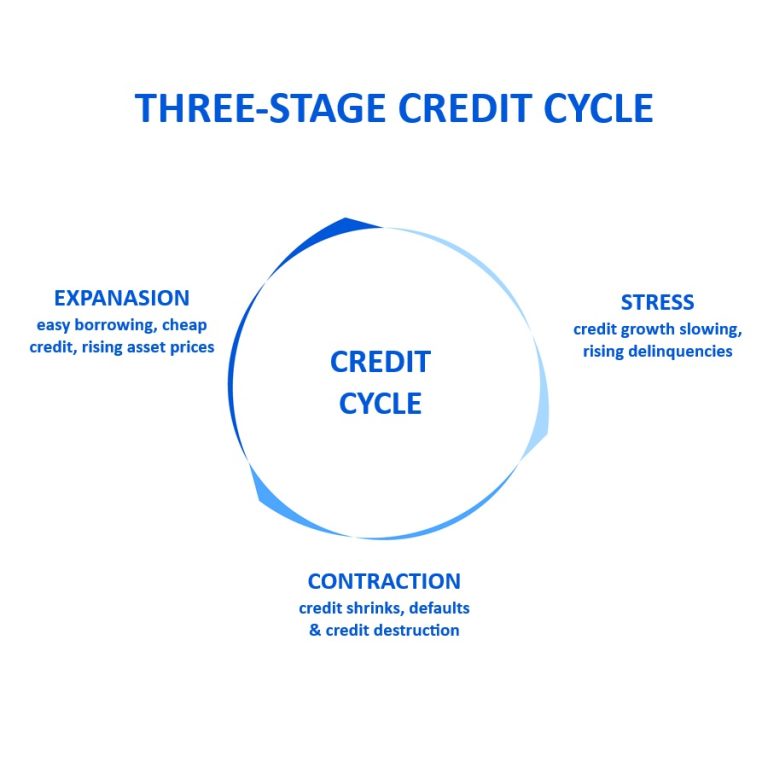
Most people feel that “something is off” in the economy right now, and one useful way to understand it is through the credit cycle. It tends to move in three repeating stages:
- Expansion — Cheap credit, easy borrowing, rising asset prices.
- Stress — Credit growth slows, delinquencies rise, weaker lenders start to fail.
- Contraction — Credit shrinks, defaults accelerate, and the system enters a “credit‑destruction” phase.
Based on rising delinquencies, private‑credit failures, and tighter lending standards, we’re no longer in expansion. The signs point to the late stress → early contraction stage, where the system becomes fragile and reacts sharply to shocks.
Geopolitics Is Amplifying the Pressure
Global tensions don’t create the credit cycle, but they intensify it—especially when the system is already under stress.
- Energy and commodity disruptions keep inflation high, forcing interest rates to stay elevated.
- Trade fragmentation and supply‑chain shifts make production more expensive, squeezing businesses and consumers already struggling with debt.
- Capital flight during instability drains liquidity from riskier markets, tightening credit even further.
- Rising government (defense) spending in tense periods increases deficits and borrowing needs, crowding out private credit.
- Currency volatility makes global financing unpredictable, adding another layer of stress.
This combination accelerates the move from stress into contraction.
How a Productivity‑Based Money System Could Stabilize Everything
A productivity‑based monetary system creates new money only when the real economy is productive — not when banks issue more debt. That shift removes the “Ponzi‑like” dynamic where the system must constantly expand credit to survive.
Productivity‑based money system like Heperum shifts the world from debt‑driven competition to productivity‑driven stability.
Why This Matters Now
We’re in a tightening phase of the credit cycle, and global tensions are amplifying the strain. A system built on real productivity—not perpetual debt—would be far more resilient, both economically and geopolitically.