• 1. 12. 2025 • H. T. •
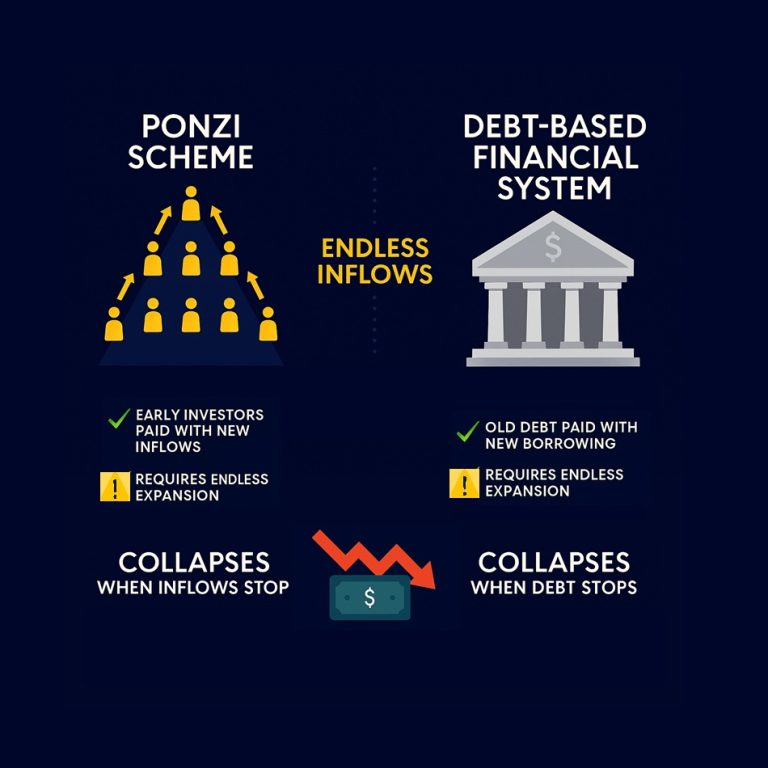
A Ponzi scheme is simple: early investors are paid with money from newer investors. It collapses when new inflows stop, because no real productivity backs the returns.
Our debt‑based financial system operates differently — but the mechanics look strikingly similar. Every unit of fiat currency is created as debt. Old obligations are repaid with new borrowing. Interest owed requires constant issuance of fresh debt, because the money to pay interest doesn’t exist until new loans are made.
This creates a dependency: the system must expand forever. If debt growth slows, defaults or deflationary spirals emerge. If it accelerates too fast, inflation erodes purchasing power. Either way, stability depends on perpetual inflows — just like a Ponzi.
The main difference? Ponzi schemes are illegal frauds. Our financial system is legal policy. But the mechanics are eerily similar — both rely on endless new inflows to survive.
Governments can roll over obligations, print money, and adjust interest rates to delay collapse. But critics like Simon Dixon argue that mathematically, the outcome is the same: once debt growth outpaces real productivity, the system becomes unsustainable.
That’s why alternatives are gaining attention, these could to break the cycle of perpetual currency printing and debt rollover. Heperum is anchoring value in productivity, where the supply of currency is directly related to products and services created. Can such alternatives restore trust in currencies and show us a different path?